Private 5G Spectrum
byRahul Kaundalon
The speed, capacity, and latency requirements of next technologies and services, like robots and ubiquitous IoT applications, will be supported by 5G services.
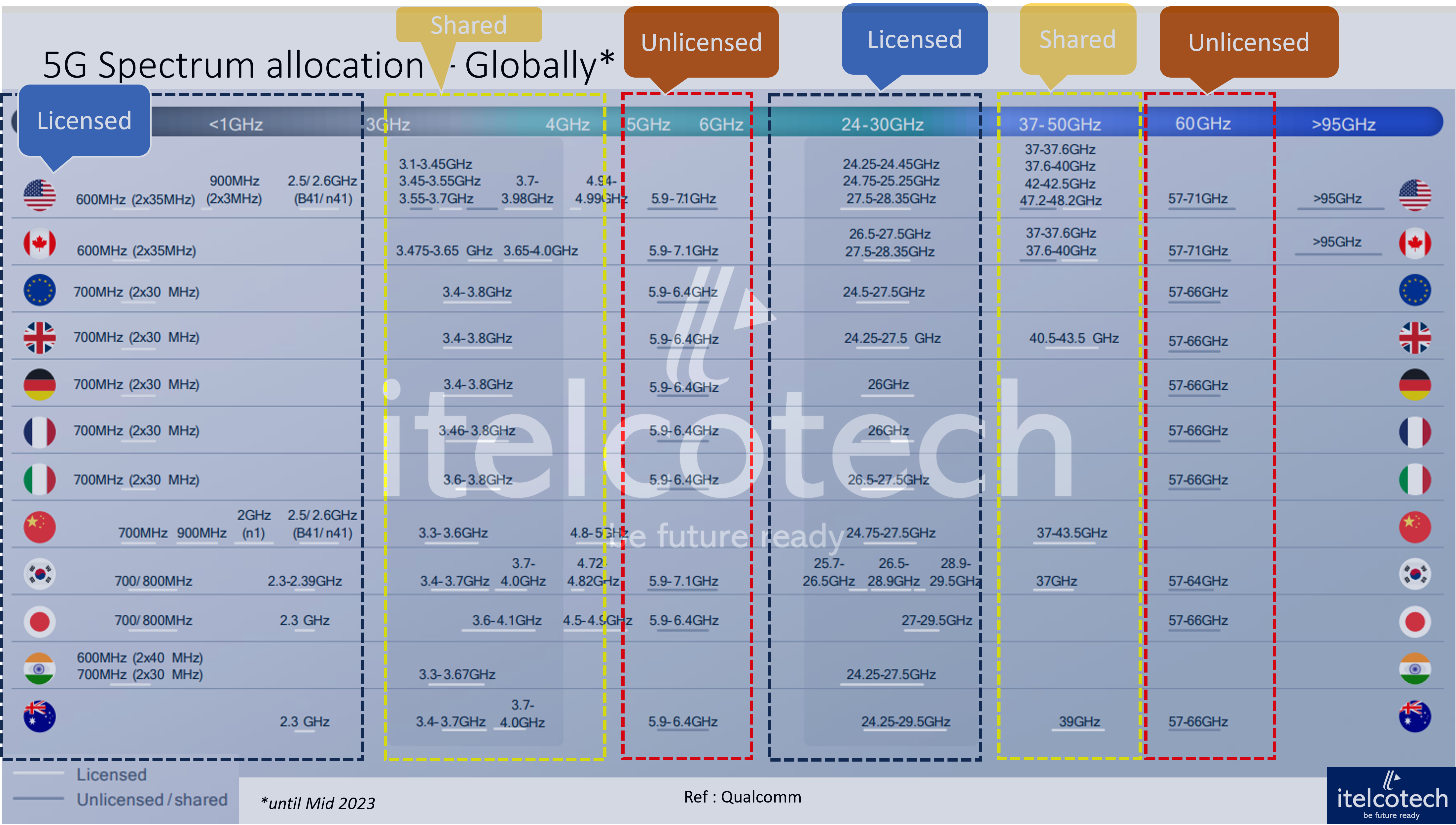
To achieve these services by 5G there are multiple spectrum bands that include a range of frequencies divided into three bands (low, mid, and high). Each band has different capabilities: low band has greater coverage but somewhat lower speed, mid band offers a balance of both, and high band offers higher speed but smaller coverage radius.
For private 5G players, there are different ways in which spectrum can be chosen to provide above mentioned services and these options are :-
a. Licensed Spectrum :- It is a classical spectrum licensing model (Mobile industry is priority here). Private 5G player can obtain it from Mobile Network Operators.
b. Shared Spectrum :- Obtained directly from Regulator and cost varies depending upon the number of base stations and type of carrier (small or large channel bandwidth). It costs much less than licensed spectrum but there are some restrictions in transmission power per base station in this case.
c. Unlicensed Spectrum :- 5G can be deployed in unlicensed bands such as 5GHz/ 6GHz/ 60GHz. As it is unlicensed, cost is major driving factor for deploying such spectrum options for private 5G but this benefit comes with the downside of high chances of interference in the network, so there is a tradeoff.
Globally, spectrum landscape for private 5G is changing and evolving continuously but can refer to the attached allocation of spectrum as of mid-2023. (Ref - Qualcomm)
To learn more about PRIVATE 5G, refer to the course at - https://www.itelcotech.com/learningpath/private-5g